

sweetgrass, by lucien castaing-taylor and ilisa barbash, documents an instance of the long-standing practice of grazing private livestock on public land: the summer pasturing of several herds of sheep in the montana mountains. in 2003, we trailed a sheep band during our poorly planned foray into the bridger-teton wilderness in wyoming's wind river mountains; for ten days, we walked through montane forests filled with crushed saplings and grassy bowls stripped of grass and roiled into mud. public land grazing is perhaps ill-suited to the scale of industrial ranching.
but this is incidental in sweetgrass. for much of the film, the camera is the stable lens into a world of sheep, dogs, and people running, walking, eating, and being frustrated at each other; it achieves the appearance of the true ethnographic eye—invisible to the participants and capturing the range of their daily experience.
remarkable and worthwhile.
Jun 5, 2013
odyssey


Jun 4, 2013
the german tradition
Volkmar Arnulf stresses that to him bespoke tailoring is about the customer’s need, not imposing a style on the customer ... As a tailor you are embedded in a certain history of tailoring but a first-class bespoke tailor should try to find out what serves the customer using all his knowledge and tools. "I always try to figure out, which line will make the customer look as good as he possibly can. Later, when striking the pattern, I apply various thought models to reach the right result ... How can a computer do that?"
May 30, 2013

May 28, 2013
the perks of ease and convenience
I traveled with West to New York. We stopped at a grocery store in which the cash registers were equipped with one of those devices that reads the price of an item automatically, a computerized checkout system. This one wasn't working well. West got down on his hands and knees and poked his head in under the cashier's counter to have a look at the thing. The clerk made her mouth an O. When West came out, dusting off his hands, he explained that he had helped design this particular model when he had worked at RCA. "It's a kludge," he said grinning. The clerk had some trouble figuring what the beer we bought ought to cost, and as we left, West said, out of her earshot, "Ummmmh, one of the problems with machines like that. You end up making people so dumb they can't figure out how many six-packs are in a case of beer."(where are they now? a status update from december 2000.)
tracy kidder, the soul of a new machine
May 21, 2013
 this is
 new york, 2013; paris, 2009.
May 13, 2013
the right beer at the right time
When the cool of the pond makes you drop down on it
When the smell of the lawn makes you flop down on it
When the teenage car gets the cop down on it
That time is here for one more year
jonathan richman, that summer feeling*
 (for illustration only; what we're actually Drinking now is la clarine on the fifth day.)
(and if you're watching jonathan richman anyway, you can't not see the one with the camel outfit.)
May 12, 2013
priorities
those visiting the motherland for the first time often ask me for advice. fortunately, the best places to eat in singapore are the ones which have been around for years (the wave of new food has been generally trumped up but mediocre). even so, i routinely consult my agents on the ground for Hot Tips about the latest and greatest.
minzhi: must your 4 friends go for chinese fine dining? can't they go to chin lee and have great teochew food?it is important to always have the right priorities.
vt: i suggested liang kee also. chin lee's better? never been.
mz: when are these people coming?
vt: they are in town already.
mz: what?! then what are these people feeding on NOW? this is terrible! they could be eating all the wrong things this very moment!!!!
and, public service announcement: qun zhong, once purveyor of excellent guotie and xiaolongbao, is no more. an establishment styling itself jing hua xiao chi (confusingly the name once on the qun zhong storefront) has reopened in the same space and serving approximately the same menu. it is a new management and a new kitchen, however, and reportedly vastly inferior. so the cookie crumbles.
May 9, 2013
katsuhira's tiger
this long but worthwhile video documents ford hallam's meticulous reconstruction of the lost half of a pair of tsuba by hagiya katsuhira. nearly every stage is embedded in the workmanship of risk: the further along, the more stands to be lost by the commission of even a small error in work.
slow is always better ... you have to feel what's going on. this is why i reject power tools. they're simply far too fast. you can't feel the irregularities. the tool simply takes over.
[found thanks to joakim]
Apr 30, 2013
observation
In short, men will find out that the men of our days were wrong in first multiplying their needs, and then trying, each man of them, to evade all participation in the means and processes whereby those needs are satisfied; that this kind of division of labour is really only a new and wilful form of arrogant and slothful ignorance, far more injurious to the happiness and contentment of life than the ignorance of the processes of Nature, of what we sometimes call science, which men of the earlier days unwittingly lived in. They will discover, or rediscover rather, that the true secret of happiness lies in the taking a genuine interest in all the details of daily life.on which, also see david pye and t.h. white.
william morris, "the aims of art"
Apr 24, 2013
downtown

i came to las vegas on monday night and spent much of yesterday and today walking around the old downtown, outside the region covered by the downtown project. in a 3-hour, 4-mile walk this morning, i counted over 40 small law practices, numerous bail bond shops, and an improbable number of motels. there was one grocery store and a handful of 7-11s. this town makes me wonder what people were thinking as they decided to set up shop here. on the other hand, there is an abundance of great thai food and a truly spectacular taco.
Apr 17, 2013
intentional ambiguity
Monday, 4/22/2013; 10am to noonBaker Library 102, Harvard Business School [map]
Amy Edmondson (co-chair), Christopher Winship (co-chair), Jeffrey T. Polzer
Intentional ambiguityVaughn Tan
Organizations increasingly operate in uncertain external environments which are not only risky (uncertain in quantifiable ways) but also ambiguous (unquantifiably uncertain, featuring unclear reality, causality, or intentionality). Though the two types of uncertainty have different implications for decision-making and action, organizational theory and practice generally neglect ambiguity by conflating it with risk. How should an organization respond when the uncertainty in its environment comprises both risk and ambiguity? And what are the intended and unintended effects of these organizational responses?
I answer these questions by analysing data collected over four years from observations at nine high-end avant-garde culinary groups and 80 interviews with respondents working in the industry. My findings suggest that external ambiguity can be managed through costly internal processes that make it more likely that a group and its members can detect and respond to changes in the environment—processes that result from intentional internal ambiguity of member roles and group goals. I then describe a general mechanism by which intentional internal ambiguity supports group adaptability.
My findings complement the risk-management view of managing uncertainty by re-stating the distinction between risk and ambiguity and documenting organizational responses that are specific to the latter and not the former. I suggest that an appropriate approach to managing the unquantifiable uncertainty of ambiguity is to increase the likelihood that a group can adapt as ambiguous conditions change and show that this can be done by incorporating ambiguity into the internal operations of the group.
the oak tree
The final shape of any one particular oak tree is unpredictable ... And a town which is whole, like an oak tree, must be unpredictable also.
The fine details cannot be known ahead of time. We may know, from the pattern language which is shared, what kind of town it will be. But it is impossible to predict its detailed plan: and it is not possible to make it grow according to some plan. It must be unpredictable, so that the individual acts of building can be free to fit themselves to all the local forces which they meet.
The people of a town may know that there is going to be a main pedestrian street, because there is a pattern which tells them so. But, they cannot know just where this main pedestrian street will be, until it is already there. The street will be built up from smaller acts, wherever the opportunity arises. When it is finally made, its form is partly given by the history of happy accidents which let the people build it along with their more private acts. There is no way of knowing, ahead of time, just where these accidents will fall.
This process, exactly like the emergence of any other form of life, alone produces a living order.christopher alexander, the timeless way of building

Apr 15, 2013
stimulus, response
jens stoltenberg, who is still the prime minister of norway, had this to say after the 2011 bombing and shootings in oslo and utøya, before the identity of the culprit was discovered:
We do not know who attacked us, many are dead and injured. Norway will stand together in a time of crisis, we suffer with the wounded. I have a message to whoever attacked us, you will not destroy us, you will not destroy our democracy, and our ideals for a better world. We are a small nation and a better nation. No one will bomb us to silence, no one will shoot us to silence. Our answer to violence is more democracy.this is the correct response.
Apr 13, 2013

Apr 11, 2013
a big room, vast
There is one timeless way of building ... But though this method is precise, it cannot be used mechanically. Indeed it turns out, in the end, that what this method does is simply free us from all method ... To purge ourselves of these illusions, to become free of all the artificial images of order which distort the nature that is in us, we must first learn a discipline which teaches us the true relationship between ourselves and our surroundings. Then, once this discipline has done its work, and pricked the bubbles of illusion which we cling to now, we will be ready to give up the discipline, and act as nature does. This is the timeless way of building: learning the discipline—and shedding it.
We have a habit of thinking that the deepest insights, the most mystical, and spiritual insights, are somehow less ordinary than most things—that they are extraordinary. This is only the shallow refuge of the person who does not yet know what he is doing. In fact, the opposite is true: the most mystical, most religious, most wonderful—these are not less ordinary than most things—they are more ordinary than most things. It is because they are so ordinary, indeed, that they strike to the core.christopher alexander, the timeless way of building

Apr 9, 2013
rock star
at 150 w 25th st, in the heart of the manhattan floral district, you can find the H.I.T deli and korean diner. the bibimbap ($8.95) is superior but i cannot yet say the same about the other menu options. for instance, it is a good idea to order the ramen ($5.95) only if you have successfully exited your startup and wish to recall fondly the days, now thankfully long-past, when you survived mostly on cup noodles. rock star, on the second floor, will satisfy many of your commodity and non-commodity geological needs. for instance, the need for kunzite, a heart stone that spreads around it an irresistible aura of calm and healing ($4/gram).


Apr 8, 2013

good things


a coily bronze snake from ancient greece, exact provenance and age uncertain. and gudea of lagash, whose diorite hat and stony gaze are cool.
Apr 7, 2013
metropolitan

now that my friends have children, i sometimes find myself at the met on a saturday morning observing little people playing african instruments under a ceramic relief of striding lions from ancient babylon. i left when i could no longer bear the thousands of people gazing cowlike at ancient statuary. (about 20 minutes.)
Apr 5, 2013
the interview
My secret as an interviewer was that I was actually impressed by the people I interviewed ... awed by people who take the risks of performance[,] I become their advocate and find myself in sympathy.
roger ebert, life itself
Mar 24, 2013
too light winning make the prize light
Animal-drawn plows varied from country to country and even from one farm to the next. They had to be coordinated with the type of soil, the moisture content, the kind of planting, the draft animals used, and the farmer's own movement. When animals were replaced by mechanical power, plows were simplified, the differences between them became less, and the variations between plows used in some areas disappeared completely. With mechanical power, it was no longer necessary to design each plow individually. General plows were designed to work almost any kind of soil. The farmer was freed from the constraints of his environment. He no longer had to understand his plow in relation to his soil composition.
christopher and charlotte williams, craftsmen of necessity
Mar 23, 2013

Mar 22, 2013
crushed earth
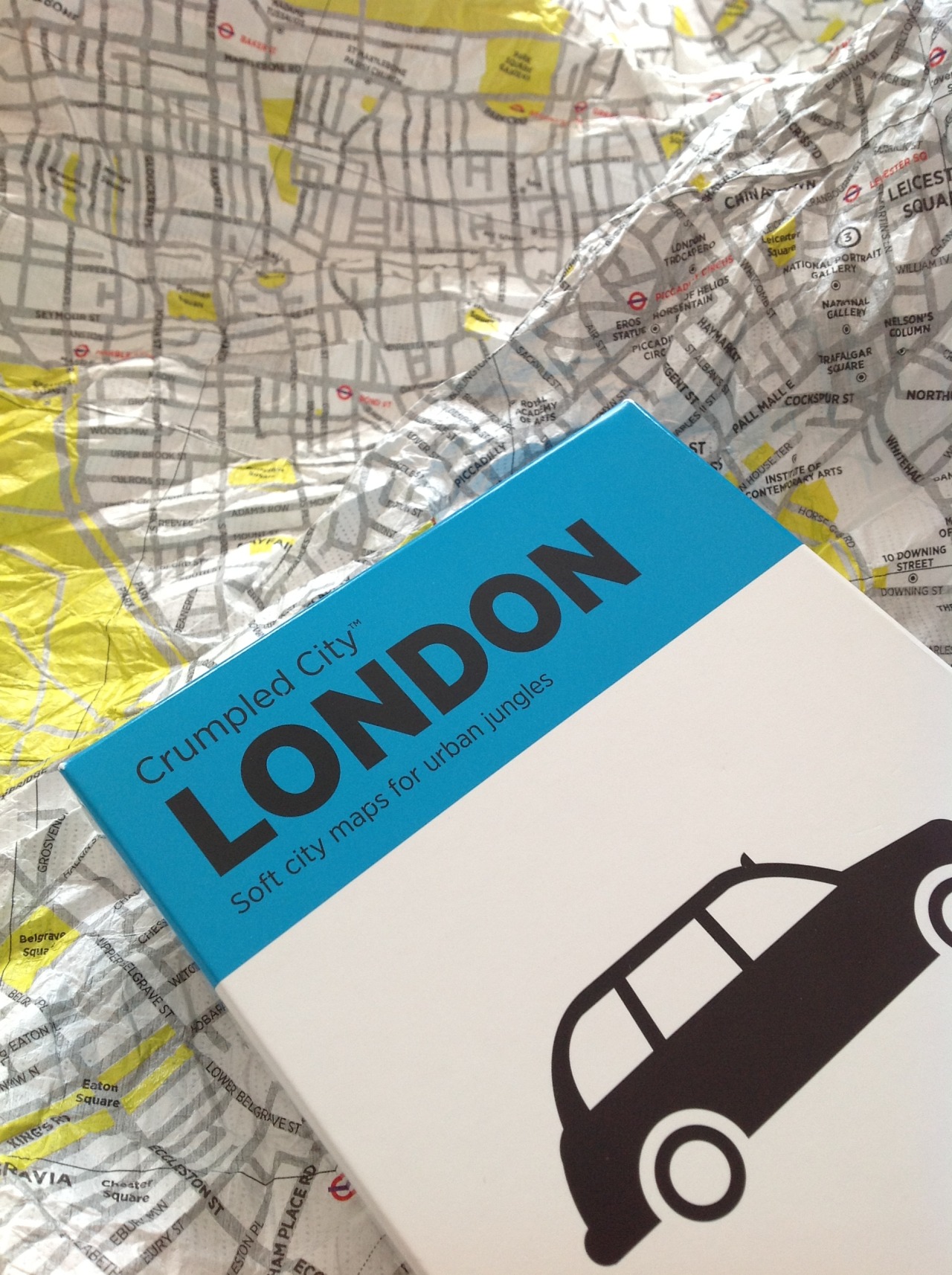
if i move here, i will be cartographically prepared. doubles as weatherproofing. [thx g + c]
Mar 13, 2013
bedtime reading

worthwhile, and the opening pages about pattern should be required reading for organizational behaviorists.
... no pattern is an isolated entity. Each pattern can exist in the world only to the extent that is supported by other patterns: the larger patterns in which it is embedded, the patterns of the same size that surround it, and the smaller patterns which are embedded in it. This is a fundamental view of the world. It says that when you build a thing you cannot merely build that thing in isolation, but must also repair the world around it, and within it, so that the larger world at that one place becomes more coherent, and more whole ...
christopher alexander and collaborators; a pattern language
the island
interviewer: What would you like to tell people?
andrei tarkovsky: I don’t know … I think I’d like to say only that they should learn to be alone and try to spend as much time as possible by themselves. I think one of the faults of young people today is that they try to come together around events that are noisy, almost aggressive at times. This desire to be together in order to not feel alone is an unfortunate symptom, in my opinion. Every person needs to learn from childhood how to spend time with oneself. That doesn’t mean he should be lonely, but that he shouldn’t grow bored with himself because people who grow bored in their own company seem to me in danger, from a self-esteem point of view.
[from the increasingly tiresome but still frequently interesting brainpickings, to whom i say: "concision is a virtue."]
Mar 9, 2013
drop by drop, it becomes a river
"Renunciation," I said, "even at this late date, can work." "I'd agree with that," said Arkady. "The world, if it has a future, has an ascetic future."
bruce chatwin, the songlines

Mar 4, 2013
going nowhere, seeking no victory
saturday, before dinner at 900 degrees in manchester, NH—a pizza parlor with no similarities to this new york museum of pizza diversity other than the name—we saw japanese swords at the nearby currier museum of art, which also contains a stunningly difficult laminated desk by jere osgood.
The narrow view of natural farming says that it is good for the farmer to apply organic material to the soil and good to raise animals, and that this is the best and most efficient way to put nature to use. To speak in terms of personal practice, this is fine, but with this way alone, the spirit of true natural farming cannot be kept alive. This kind of narrow natural farming is analogous to the school of swordsmanship known as the one-stroke school, which seeks victory through the skillful, yet self-conscious application of technique. Modern industrial farming follows the two-stroke school, which believes that victory can be won by delivering the greatest barrage of swordstrokes. Pure natural farming, by contrast, is the no-stroke school. It goes nowhere and seeks no victory.more fukuoka here. context is important: the pizza would have been better had greatness not been keenly anticipated.
Mar 3, 2013
the ocean of unknown possibility
richard feynman, he say: "i think it is much more interesting to live not knowing than to have answers that might be wrong." right on.