
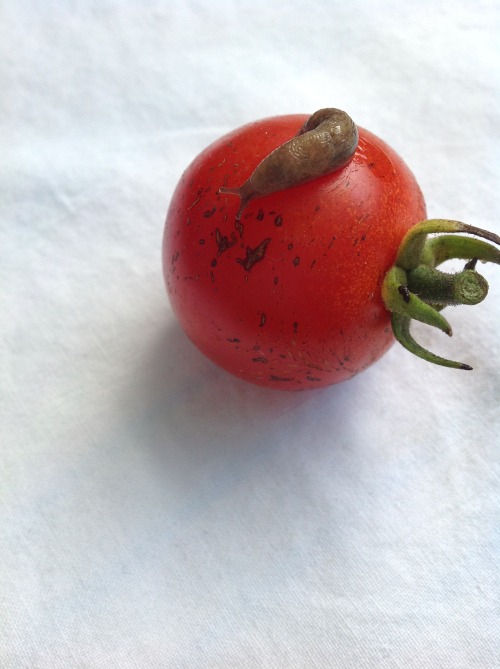
To sit in the sun and read Columella on how to plant a thorn hedge is a pleasure I had to teach myself. No, I was teaching myself something else, and the thorn hedge came, wisely, to take its place. They're longer lasting than stone walls and have an ecology all their own. Birds nest in them and snails use them for a world. Hedgehogs, rabbits, snakes, spiders. Brier rose, dog thorn. There are some in England still standing from Roman times.
"the hunter gracchus," guy davenport
Showing posts with label agriculture. Show all posts
Showing posts with label agriculture. Show all posts
Apr 3, 2014
thorn hedge


Oct 28, 2013
Mar 4, 2013
going nowhere, seeking no victory
saturday, before dinner at 900 degrees in manchester, NH—a pizza parlor with no similarities to this new york museum of pizza diversity other than the name—we saw japanese swords at the nearby currier museum of art, which also contains a stunningly difficult laminated desk by jere osgood.
The narrow view of natural farming says that it is good for the farmer to apply organic material to the soil and good to raise animals, and that this is the best and most efficient way to put nature to use. To speak in terms of personal practice, this is fine, but with this way alone, the spirit of true natural farming cannot be kept alive. This kind of narrow natural farming is analogous to the school of swordsmanship known as the one-stroke school, which seeks victory through the skillful, yet self-conscious application of technique. Modern industrial farming follows the two-stroke school, which believes that victory can be won by delivering the greatest barrage of swordstrokes. Pure natural farming, by contrast, is the no-stroke school. It goes nowhere and seeks no victory.more fukuoka here. context is important: the pizza would have been better had greatness not been keenly anticipated.
Dec 1, 2012
first principles
Before researchers become researchers they should become philosophers. They should consider what the human goal is, what it is that humanity should create ... Modern research divides nature into tiny pieces and conducts tests that conform neither with natural law nor with practical experiences. The results are arranged for the convenience of research, not according to the needs of the farmer. To think that these conclusions can be put to use with invariable success in the farmer's field is a big mistake.
Sep 18, 2012
costs, benefits
To live well in community, our individual consumption and acquisition will be reined in and held by the bonds of inconvenience. In turn, we will be connected in multiple ways to involuntary responsibilities, and natural seasons, and common cause. Living with a measure of inconvenience and with the energizing and irritating connections it implies keeps us ‘in our places' and ‘in our senses.’ We trap ourselves in a huge contradiction, I believe, when we — farmers and consumers alike — continue to want and cater to convenience on the one hand and mourn the loss of mutuality and collective concern on the other.
laura delind, "place, work, and civic agriculture" [thx jessd]
Jan 1, 2012
the occasional annual ramble
home for three weeks in january for a wedding in the family, i discovered the beginnings of a coffee culture in singapore, one that gets the coffee right and the space too (here and here). reports from the field suggest that third (or even fourth) wave cafes are proliferating with astounding speed. i also discovered that food in singapore, once effortlessly and inexpensively tasty and full of heart, is now depressingly pricey and mediocre. i stopped in tokyo on the way back to cambridge. i'm glad to have seen japan again before the tsunami and fukushima devastated the country. it remains one of the few places where things are done right. we had a remarkable and understated dinner at tsuru ni tachibana that remains high on my incomplete list of nearly perfect meals (also see these frustrating updates from our field correspondent, who lives close by).
back in frosty massachusetts, i managed to slice my left index finger open while cutting bread. that was fun. some of us caravaned north to madison, NH, to celebrate a birthday with a lot of scotch. after many months, i became a regular at the hi-rise on brattle street (a single shot gibraltar is the drink). i visited lake forest again, to give a talk on telling stories with maps. one day at the hi-rise, club sandwich is born: nerds who meet sporadically for coffee and discussions that provoke nearby customers into fits of anger. mac and i thought briefly about rehabilitating a used rotavap for nefarious but delicious purposes (yet another case of execution failure).
spring came, damply. i went to dc several times to visit a field site. my respect for their operation grows and grows. each visit was the occasion for some informative drinking with the person behind the quite fine selections at ledroit. some long negotiations bore fruit, opening the way to a summer in denmark and the uk. meanwhile, the landlord at 32 chatham st, finally realising the value of his property, raised the rent by 25%. it was a nice apartment—but not that nice. i disposed variously of 50% of my stuff, in preparation for moving.
spring came, damply. i went to dc several times to visit a field site. my respect for their operation grows and grows. each visit was the occasion for some informative drinking with the person behind the quite fine selections at ledroit. some long negotiations bore fruit, opening the way to a summer in denmark and the uk. meanwhile, the landlord at 32 chatham st, finally realising the value of his property, raised the rent by 25%. it was a nice apartment—but not that nice. i disposed variously of 50% of my stuff, in preparation for moving.
i moved may 31 and left for copenhagen on june 1. this was not the best idea. but denmark in the summer! what a great place. light in the sky til 10, then 11pm, and people everywhere who know how to enjoy a brief but beautiful season. i went to aarhus for a bit, to the beautiful new restaurant malling & schmidt where i ate a piece of very old beef that made me go to northern sweden (on which, see below), then came back down to copenhagen. at the field site, i encountered generosity, openness, strange architecture, and odd but tasty foods (here, here, here, here, and here). those were some long days, standing in the corner of the kitchen washing dishes while watching people think and cook. the danes know their flaky baked goods and are the best dinner conversationalists i have ever met: dinner with a pair of apple growers lasted 8 hours (they harvest unripe apples to add acidity to their cider, and freeze them until the main crop ripens fully). there was an experimental dessert that opened a new book, and a wine bar with great taste. my last full day in copenhagen, i had a nice surprise, then late in the day the skies poured down on the city a vast amount of rain. this washed away the tents at the roskilde festival and sent people running to their basements to survey their submerged belongings with dismay.
after denmark, straight on to london. another field site, a very different sort of place, for a week. i have never seen a more completely utilised kitchen. while in london, i also had the opportunity to try several health foods from st john.
oslo is a tiny city with incredible tap water (cold and ineffably pure-tasting), staggeringly expensive and mysteriously mediocre food, and the world's best snack. we left nearly immediately for fäviken magasinet, nine hours drive north and over the border in sweden. this tiny restaurant, by virtue of its remote location, can create for those who eat there a complete experience of hospitality. the carnivorous should note that lucky diners are sometimes served perfectly roasted pieces of beef raised and slaughtered on the property, then dry-aged in a casing of fat for many months (sometimes as many as seven). this meat is extremely good to eat. magnus nilsson, who runs the kitchen, has been experimenting with ways to grow and preserve meats, fruits, and vegetables so that the abundance of the swedish summer extends throughout the year. the small scale of his restaurant and its location on an enormous and productive property lets him do things which other chefs in the nordic region want to do but cannot. their kitchen garden aims for flavour and the ability to continue to produce the same amount and quality of food indefinitely (as measured by the amount of biomass and nutrient loss in their soils). for these goals they have sacrificed productivity and ease of cultivation. after dinner, which begins at 5pm and ends well past midnight, it is nice to stumble upstairs and fall immediately into bed. the next morning, if you wake up early enough, it is possible to dive (sky-clad, if you desire it) into the nearby lake. this brisk and bracing activity will help you become morally fibrous. a large breakfast appears shortly thereafter featuring, among many, many other things, a thick porridge of mixed grains and seeds (crushed semi-pearled barley, oats, sunflower seeds, flax seeds, and hazelnuts).
we dropped one of the fellow travelers off in trondheim, then drove down through norway, taking the E6 through the mountains. our destination was oslo by way of oppdal, where we spent the night in a moss-roofed smokehouse temporarily occupied by a geologist. back in oslo, the weather was nice, then it was not. one day, while i was out buying some smash about a mile from the norwegian ministry of petroleum and energy, i noticed that everyone had stopped moving. the bombings in oslo city center, then the shootings on utøya, consumed our attention for hours. the next day, the city was quiet. the norwegian response to this extremist right-wing act was dignified and completely correct: "our answer to violence is more democracy."
it was good to be back in cambridge after two months away but, almost immediately, i left again for a wedding in cleveland. this is not a city to go to in the depths of summer. the schedule was sufficiently condensed that we did not even get to try the fabled and splendid starch-stabilised ice creams made by jeni. but a wedding held in the presence of dinosaurs was more than sufficient compensation.
back in cambridge, a friend from home came to visit and we installed 30 linear feet of industrial shelving in the apartment to accommodate our large and growing collection of cooking equipment and supplies. i discovered that the hi-rise on brattle street was to close forever. this made many of us unhappy. then, in mid-august, we left town again for charlottesville. driving there from dc, grapefruit proved vital for public safety. we entered the city as black clouds gathered overhead, and got to our rooms just in time for lightning to brighten the sky and tremendous gusts of wind and waves of hailstones to blow through. the lights went out across the street, and then went out in the building. gravel from driveways littered the darkened streets as we drove downtown in search of dinner. only bizou was open, but this old favourite from a decade ago was exactly right. the hot, moist air left behind by the storm had dissipated slightly after dinner but the smell of ozone remained. after this tempestuous opening, the weather became benign and conducive to morning coffee, walking about, and long dinners. a nice time was had by all, with some exceptions.
i flew from dc to sfo for a wedding in pescadero. this was great (as you can see). san francisco is ever the same: hills, beautiful weather, wondrous produce, happy people, great coffee (also see here), in-n-out, krispy kreme, and many dogs. but, you ask, where is the moral fibre? this is a good question. then some very last minute negotiations saw me abandoning my ticket from sfo to boston and flying instead to copenhagen again, for planting thoughts, a symposium about the future of food. the one thing you don't expect on arriving in copenhagen, but which is marvelous, is an indian dinner. behind the scenes, the organization of this first mad symposium was fraught. the morning of the first day, an enormous thunderstorm nearly brought down the symposium's circus tent and left the field completely saturated. locals came wearing waders and rainboots. i spent the week squelching around, never completely dry. but meeting lots of interesting people. symposium details here.
back to cambridge in september. i sat down to digest hundreds of pages of fieldnotes from the summer and write a dissertation prospectus. it would not be inappropriate to describe these two processes as "slow," or even "meandering." in october, the new hi-rise on wendell street finally opened to general rejoicing. by intent, its ceiling looks like the scrubbed pine floor of a swedish farmhouse.
the fall was brilliant: warm and dry. a good growing season in the northeast, so the markets overflowed (the apples were particularly good this year, if difficult to identify). it was not perfect weather for making kimchi, but the process seemed to work anyway. late in the season, various individuals converged on stockbridge, MA; some of us made a return visit to nudel, in lenox. we hope this will be an annual event.
now, we are in the depths of winter, but fall hasn't really left us. other than several hours of wet slush during a visit from some detroit food entrepreneurs and a few isolated flakes on christmas morning, we have had no snow. this winter has been unseasonably warm, in contrast with last winter which was brutal and involved many days of wintry mix and glassy frozen sidewalks. to celebrate, i freed myself from the tyranny of AT&T and apple.
the fall was brilliant: warm and dry. a good growing season in the northeast, so the markets overflowed (the apples were particularly good this year, if difficult to identify). it was not perfect weather for making kimchi, but the process seemed to work anyway. late in the season, various individuals converged on stockbridge, MA; some of us made a return visit to nudel, in lenox. we hope this will be an annual event.
now, we are in the depths of winter, but fall hasn't really left us. other than several hours of wet slush during a visit from some detroit food entrepreneurs and a few isolated flakes on christmas morning, we have had no snow. this winter has been unseasonably warm, in contrast with last winter which was brutal and involved many days of wintry mix and glassy frozen sidewalks. to celebrate, i freed myself from the tyranny of AT&T and apple.
the days are short but they've begun to lengthen again. in the late afternoons, it is nice to lie on the floor under the skylight and doze off in the sunshine while pretending to read an Important Scholarly Paper. the river flowing right outside my window remains ice-free. and today, on the first day of 2012, i went for a run in the sun and a t-shirt.
i'm grateful for small things and big things too.
i'm grateful for small things and big things too.

Sep 12, 2011
planting thoughts: session 3, sunday a.m., 8/28
stefano mancuso (director, international laboratory for plant neurobiology)
the unexpected plant: beyond the animal model
we should re-examine our preconceptions about plants as unthinking, unmoving things. stefano mancuso explained how plants are able to sense and respond to changes in their environment with more precision and sophistication than we expect. some plants (like sunflowers) appear to learn how to respond to the environment collectively, so that they may be thought to be social organisms. plants have also evolved together with the animals that live around them (including humans). they make use of animals to reproduce and protect themselves, using tasty fruit to induce animals to transport their seeds or protect them from other animals. we might, for instance, think of domesticated plants such as wheat or corn as having trained humans to protect and propagate them with enormous success. plants have also developed remarkable systems for protecting them from threats in their environment: the chemicals plants produce repel insects, warn nearby plants of imminent attacks insects, and also happen to sometimes taste good to humans.
alex atala (chef at DOM, são paulo)
insects and plants: together for life
eating insects seems unfamiliar and scary, alex atala said, but everyone who has ever eaten strawberry yogurt has eaten insects in the form of a red dye which is extracted from cochineal beetles. we seek the familiar because our experiences only make sense in terms of what we have experienced before. he distributed cubes of unflavoured agar, each containing a piece of the amazon: a single amazonian ant. many people in the audience thought it tasted of lemongrass and citrus but atala pointed out that to people who have grown up eating those ants, lemongrass and citrus taste like ants. atala's point was that we should not take for granted culturally defined rules of what should and should not be eaten. "to understand a flavour better," he said, "we must take ourselves away from the familiar." after cooking for years in european restaurants, he realized he had to go back to brazil to explore the then-unknown flavours of his country, rather than trying to cook the food of a different part of the world. his restaurant in brazil now uses the amazon as a source for new and unfamiliar ideas and ingredients that even most native brazilians have never had the opportunity to taste--raw propolis-filled rainforest honeys, spontaneously fermented sugarcane vinegars, a panoply of forest herbs and plants, and others. the enormity and diversity of the country-spanning amazon paralyzes what atala calls "the sophisticated world": in dogshead, one relatively small part of the amazon, there are 23 ethnicities, 21 languages, and over 300 varieties of domesticated plants that are not known outside that region. the amazon as a whole is "a world of flavours remaining to be discovered." atala's understanding of the region's foods comes from natives whose knowledge is anything but simple. atala increasingly believes that our efforts to preserve nature must also include plans to preserve peoples and cultures, or rich stores of local knowledge and practices will be lost.
francois couplan (ethnobotanist, author
wild plants and culinary creativity
80,000 wild plants are known to be edible and were once eaten--a balanced, diverse, interesting, healthful diet. we've forgotten about most of these wild plants because of the rise of agriculture, and because eating wild plants used to signal low social status. couplan believes that there is a fracture of the wild and the civilised that is leading us to unbalanced, monotonous diets that depend too much on cultivated plants and which make us sick. our diets will improve if we are able to be opportunistic in combining both farmed foods and foraged foods, gathering what we can, when we can. this can only happen if more people learn about how edible wild plants can be used. this, couplan believes, is where haute cuisine comes into the picture. he has taught chefs in france and the rest of europe how to identify, gather, and use wild plants in their restaurants. "when chefs start using plants," he said, "they become stars and are not anymore despised. people begin to want to learn about them."
massimo bottura (chef at osteria francescana, modena)
never stop planting
trapped in new york by hurricane irene, bottura sent a video (subtitled version available on eater) and a statement instead. bottura believes that food should be an object of contemplation, not just one of consumption. we've turned into lazy eaters, pursuing pretty, superficially satisfying foods that are sweet, smooth, and unctuous. challenging food changes those who eat it, bottura thinks, and chefs should be helping people learn to eat challenging food again. to do this, chefs have to acknowledge that food is not only about aesthetics but also about ethics. cooking ethically means going back to the source of ingredients and influences, and acknowledging the culture and history from which the food comes. without these creation stories--stories from friends, suppliers, customers, neighbours--food loses its connection to place, time, and people. without being aware of this connection and reflecting it in, the chef's job is incomplete. "food is one of the strands of the cultural braid that binds us," bottura said "our business is not only about serving people food. that is only the final act."
søren wiuff (farmer)
all that we eat has been alive
søren wiuff changed how he farmed years ago when he realised that he couldn't make money farming industrially even though his farm was highly productive. he went back to doing things as his father did: by hand and with care, "learning what will grow in the garden, feeling your body as part of harvesting something." his close connection with the crops he grows led him to question many of the assumptions farmers usually have about what they grow and how they grow them. he gradually learned how to respond to the unpredictable, changing nature of the living things on his farm rather than trying to force them to fit into a recipe, a formula, a set of preconceptions. this has led to his accidental discovery of new crops: sowing leeks later in the season than usual (so late that wiuff thought the cold would kill them) led him discover baby leeks that sprout in april of the following year, or tasting the usually discarded aerial bulbils of mature leek plants. he credits this partly to support from working with chefs--like those at noma--who are open to trying these new and unfamiliar ingredients and making delicious things out of them. "it's like having playmates," he said, "they make me good by respecting that i'm a farmer. if someone tells me i'm doing something good, i do better next time."
molly jahn (univ. of wisconsin and commission on sustainable agriculture and climate change)
how good food can save our planet
people have to demand healthy food systems for them to take hold and become successful. when molly jahn was working as a plant breeder, she collaborated with organic farmers to develop a new variety of delicata squash that was delicious and more pest-resistant. she targeted organic farmers and chefs in her her efforts to promote the variety, and realised that the variety became successful when chefs demanded it, put it on their menus, and exposed it to consumers. much later in her career, when she had begun to work on agricultural policy in wisconsin, she helped a group of potato farmers in the state develop a stringent integrated pest management and certification program (eco-grown) to protect wildlife on and around their farms. though the program was successful in its environmental goals, she thinks that it never achieved commercial success because chefs were not as involved in its promotion. jahn's message to chefs was simple: "chefs help accelerate people's valuation of good, responsibly produced food."
other posts about planting thoughts:
planting thoughts: a symposium without dissenting views,
summaries: session 1, session 2, session 4
Sep 10, 2011
planting thoughts: session 2, saturday p.m., 8/27
kamal mouzawak (founder, souk el-tayeb)
make food not war
"difference," kamal mouzawak believes, "can be a reason for war or a celebration of diversity." his producer-only farmers' markets in lebanon attempt the latter by bringing people and producers from rural and urban areas together. direct contact between producer and consumer is important: it gives recognition to the producer, teaches the consumer about food and who it comes from, and builds trust in the food system. "food is not a commodity," he noted, "it is not something you just buy. it is something people grow, buy, and cook." his markets are designed to not just be places where people can buy and sell products but also places where traditions and stories can be exchanged and kept alive.
inaki aizpitarte (chef at le chateaubriand and le dauphin, paris)
rené mosse (winemaker, domaine mosse)
coquina et naturali vinorum
culinary inspiration can come from anywhere. for inaki aizpitarte, inspiration comes from wine, particularly natural wines that are different, that are not homogeneous. these wines express the flavour of a place and what the winemaker loves. natural wines, winemaker rené mosse said, require the winemaker to accommodate the native yeasts and unpredictable conditions, to trust and act in the moment. the tension between control and uncertainty is part of what makes natural wine interesting. aizpitarte picks up on this tension and responds to it when he develops a new dish. he illustrated this with a dish of "risotto" made with rice grain-sized pieces of samphire in a parsley puree, served with mosse's les bonnes blanches, a white anjou from the loire made with grapes grown in rocky ground filled with schist and quartz. the parsley and the salt of the samphire recall the familiarity of moules marinieres, but with a noticeable and unfamiliar set of flavours mixed in. these flavours echo the minerality, acidity, and wild nuances of the natural wine. aizpitarte said, "without wines like this, my food would not exist."
thomas harttung (founder, aarstiderne organic community supported agriculture)
urban food systems
thomas harttung sees urbanisation is an opportunity to rethink how our food supplies work. he estimates that an urban area the size of metro new york can produce 3mm tons of food per year. 50 new york metro areas worth of agricultural land are converted into cities each year. smallholder agriculture (which is well-suited to urban environments) is close to the world average for agricultural productivity and requires far fewer energy-intensive inputs like fertilisers and pesticides. small-footprint agricultural methods using man-made enriched soils would support this kind of urban agriculture. these methods were developed thousands of years ago in the pre-columbian period to grow food for dense populations of humans in the poor soil of the amazon. urban agriculture could be an elegant part of the solution to the food supply problem: the technology is already available, it doesn't compete with industrial agriculture for space, transport costs would be minimal, and small plots are conducive to extremely (and deliciously) diverse production. urbanisation, harttung argued, isn't going away so we should work to make urban agriculture a significant contributor to the food system instead of focusing only on expanding industrial agriculture.
magnus nilsson (chef at fäviken magasinet, åre)
fäviken: how we do the things we do
at fäviken in northern sweden, magnus nilsson and his staff are learning how to accommodate the seasons as they forage and grow their products, then use up what they have foraged and grown. he showed the beginnings of their research over the last few years. nilsson described the task of running faviken as cooking by gradually deciphering the relationship between four puzzles: 1) what can be foraged when?, 2) what can be grown when and how to grow it?, 3) what can be stored and how to store it? they have begun to develop a sense of a time map of foods they can get from the wild, from their fields, and from storage. a major ongoing project is to experiment with different methods of cultivation to identify the ones which remain in equilibrium for the very long term: in other words, methods that produce enough food for the restaurant while also not depleting the nutrients in the soil. their priorities are flavour and sustainability, rather than productivity alone, so they have rejected very productive methods in favour of apparently less efficient ways of growing their vegetables. they are also refining techniques for preserving and storing foods. this means finding ways--such as salting, smoking, drying, pickling, and others--to make fresh foods last longer without the texture and flavour disruption of freezing them. he gave as an example a method of storing leeks in near-suspended animation by keeping them in sand at 90-95% humidity just below freezing temperature. but their exploration of storage methods also means acknowledging that stored and preserved foods are not the same as fresh ones and developing ways of cooking them that reflect that. nilsson notes that "at base, we have to make choices and tradeoffs in the food we prepare. at fäviken, we're just trying to understand what the consequences of our choices are so we can act more intelligently."
jacqueline mcglade (executive director, european environmental agency)
copenhagen is buzzing: bees, cities, and our common future
colony collapse disorder wipes out entire bee populations and is increasingly prevalent, jacqueline mcglade said. this is a problem that concerns everyone since much of our food supply now relies either indirectly or directly on bee pollination: no bees, and very soon, no food. the problem has two major components: increasing use of pesticides in agriculture and low-diversity agriculture in which a small number of crops are grown over large expanses of land. bees are susceptible to pesticides, and low-diversity agriculture deprives bees of the opportunity to find crops that have a lower pesticide load. though bees are crucial to agriculture, our existing system of agriculture is killing off the bees it depends on. beyond their importance to our food supply, bees are like the canary in the coal mine. what is happening to bee colonies now may soon begin to happen to humans too. even in the most remote regions lacking intensive agriculture or industry humans already carry in their bodies significant amounts of heavy metals from the air they breathe, and the water and food they consume. to make things worse, consumers don't have enough information to make informed choices about the pollutants in the foods they buy. within the next year, mcglade said, the EEA will be aggressively pursuing companies and facilities that are egregious polluters and expanding an air and water quality information service called eye on earth to reduce this information asymmetry.
ben shewry (chef at attica, melbourne)
the cycle of love
at his melbourne restaurant, ben shewry's food reflects the care and questioning, inquiring approach that are the foundations of his cooking. questioning the taken-for-granted can produce more elegant, innovative, and sustainable ways of cooking. shewry began using plants foraged from urban environments before the practice became popular. "i never feel richer," he said, "than when i'm feasting on the scraps of society." as he learned more about the edible plants that grow in urban areas, he realised that foraging in urban areas is elegant because it solves many problems at once: foraging provides chefs and cooks with a source of diverse ingredients, encourages people to take care of places where they forage, and offers a chance to target invasive (but edible and tasty) species that would otherwise crowd out native plants. shewry also questions the assumption that a young country like australia has a short culinary history, and looks to indigenous cultures for inspiration in his cooking. this approach has led him to develop novel cooking techniques such as earth ovens based on maori practices from new zealand and discover new ingredients like corn cured in running river water (another maori technique). for shewry the strongest motivation for a questioning approach to food is its ability to help us learn how to stop making poor choices that result in unsustainable food and re-learn how to accommodate the world rather than imposing ourselves on it. questioning provides knowledge, and "knowledge combined with care can make food taste better," shewry said, "our responsibility as chefs is to know and to act."
other posts about planting thoughts:
planting thoughts: a symposium without dissenting views,
summaries: session 1, session 3, session 4
Sep 1, 2011
planting thoughts: session 1, saturday a.m., 8/27
early on saturday morning, a storm comes into copenhagen. though it stops after only an hour, by then the field of flowers in central copenhagen where the MAD food camp raised its tents has turned into a sea of mud. off in a corner of the field, the red and blue circus tent that houses the symposium titled "planting thoughts" has partly collapsed. by 9am, the sun and the danish mosquitoes appear. some of the most world's most thoughtful chefs, writers, and thinkers about food, few of whom have appropriate footwear, stand in the mud eating bread, cheese, and danish pastries while workers, heard but unseen, struggle to repair the tent.
it's a difficult start to a symposium designed to be difficult. planting thoughts is about learning to question preconceptions about food and, in the process, going into unfamiliar and uncomfortable waters. david chang commented the night before that "this is unprecedented. nothing like this has happened before." so when rene redzepi gets onto the stage in mud-spattered boots to open the conference, the first thing he does is admit to being nervous: "i had the same feeling in my stomach when i started noma. it's a feeling in your stomach, your skin, your hair, everywhere." the kind of feeling you get when you start down a path and you don't know where exactly it leads but you sense that it may be taking you where you want to go.
when noma opened, denmark was a protestant country where food could never be cuisine. "our protestant culture was about quickly eating boring food in silence. spices were always from out there, from somewhere exotic where the people are brown and the sun shines all the time. but we found them right here under our noses." for them, noma was the start of the cascade of good things that happen when people find each other and realise they care about the same thing in different ways. "delicious food can be made anywhere," they realised, by learning who to work with, what foods are available, when to buy it, and how to cook it. to be constantly questioning is hard and uncomfortable work but because of it, rene pointed out, "the world opens up. everything is possible. and even if it isn't, we have to try."
tor nørretranders (author
from wild to tame—and back again
nature is diverse, delicious, surprising, healthy. tor nørretranders asks: "why are we so uniform, why is the food so boring, so inefficient?" the answer is that we got stuck in a rut: the food we eat today has deep roots in our history. back in the stone age, climate change made us prefer to get food by farming and taming plants and animals instead of hunting and gathering from the wild. because of that, we've become reliant on a very small number of short-sighted foods that are adapted to agriculture's short turnaround time. over 90% of our calories come from just 30 types of plant crops. the plant parts we eat must all grow and be harvested within a single growing season. they're energy-intensive to grow, not particularly healthy for us, and boring. gastronomy is about making these boring foods seem rich. and we farm these boring, unhealthy, energy-intensive foods with methods that exhaust soil much faster than it can develop. this is why farming has turned historically productive parts of the planet into expanses of wasteland today—places like the sahara and much of the middle east. modern farming delays the inevitable degradation of farmland with practices like fertilisation that consume enormous amounts of energy that we'll soon run out of. we need to develop a food system that works on a longer time-scale and reduces the long-term impact of our food production on the environment. one way to do this is by increasing the diversity of the foods we eat: entering a "high-tech stone age" by using modern technology to obtain more foods from the wild and relying less on intensive agriculture.
 )
)when miles irving was 6 years old, his grandfather taught him that there were wild foods, "treasures in the woods that were hidden in plain sight because people think of them as peasant food or, worse, just weeds with no value." when he got a little older, he wanted to continue his education in wild plants. he couldn't find anyone to teach him so he learned to identify and use them on his own, finding a huge number of edible plants with amazing flavours in the english countryside. he and his wife began to collect foraged foods for their friends, then eventually began to supply restaurants. they were surprised, then delighted, by the sense of wonder and awe that discovering wild foods produced in people. they realised that when chefs cook with wild foods, they help make people aware that wild plants can be delicious, interesting, and worth eating. this is crucial: the diversity of wild lands makes them an enormously productive—but currently under-used—source of food. chefs can help change that.
"ingredients have no meaning by themselves," daniel patterson argues, "you have to give them meaning." the now-cliched beet and goat cheese salad is an example: it dates from 1977, when laura chenel first made a fresh chevre. before then, most people knew beets only from the can. a freshly cooked beet was first a revelation, then emblematic of an approach to cooking good food simply. today, permutations of the same dish appear on menus everywhere. the question for chefs is: how can an ingredient like a beet (that now has a firmly entrenched meaning and set of associations) be used in a way that expresses something personal without losing that kernel of familiarity? understanding history and culture is part of the answer, and a crucial tool for chefs hoping to infuse new meanings and interpretations into familiar ingredients. patterson illustrated this with three beet dishes that coaxed something new and stimulating out of the roast beet: 1) beets roasted in ash before a slow fire for 6 hours, served with lingonberries, sheep sorrel, berry vinegar, and beet juice thickened with reindeer blood (a different way of roasting that produces a startling, unexpectedly sweet and juicy beet); 2) roasted beets on a rose-scented snow with yogurt (a novel pairing of floral and earthy flavours, united by the familiar combinations floral/milky and earthy/milky flavours); 3) roasted beets with a heavy glaze of their own juices thickened with gelatin and agar (the familiar roasted beet flavour/texture combination complemented by an unfamiliar texture reminiscent of a gummi bear). culture and history, patterson shows us, are not only ways to understand what food is, they are what allow chefs to transform ingredients into food.
yoshihiro narisawa (chef at les créations de narisawa, tokyo)
satoyama and reconstruction after the earthquake
satoyama and reconstruction after the earthquake
"the whole earth," yoshihiro narisawa says, "is both the source and the inspiration for gastronomy." satoyama (里山) represents an approach that treats the entire landscape as a complex food production system. to understand how this influences a chef in search of new foods, take narisawa's exploration of soil as an example. good vegetables only grow in healthy soil, which is alive with micro-organisms. healthy soil changes through the seasons, and its flavour changes as well. he makes a soup distilled from soil to demonstrate this to the people who eat at his restaurant. the soil soup is a metaphor for developing an inventive cuisine by exploring the relationship between the landscape, flavours, and food. narisawa's satoyama includes not only the wild and cultivated landscape but also the cultural and historical landscape in which he operates. he showed how he built up the flavour combinations and platings of some of his signature dishes from close observation of the natural and cultural landscapes from which their ingredients were gathered. one dish was reindeer, cedar, and a bouillon of oak and cedar, designed to combine the flavours of the japanese alpine forest on the plate. another was a dish called "sumi," which is a piece of rare beef rolled in pitch-black leek ashes to recall the long japanese tradition of producing charcoal for making sumi ink. working from the natural environment involves looking deeply to understand and then accept their complexity. even the massive earthquake in japan a few months ago has many meanings for those who know how to read them: while it created widespread destruction, it also stirred up the ocean, bringing nutrients up from the deep and creating a burst of marine life in the seas around japan today. the complexity and nuance of narisawa's dishes mirror the complex environments which inspire and produce them. chefs lose a powerful source of inspiration if these environments disappear.
we grow more food per head than we need, hans herren tells us, but we grow the wrong food, in the wrong places, in the wrong way. with existing knowledge, we can feed everyone good, healthy, sustainably produced food without relying exclusively on large-scale, fossil fuel-intensive, industrial agriculture. herren is one of the lead authors of the international assessment of agriculture knowledge, science, and technology for development (IAASTD). this international report emphasises that hunger and food shortages are caused by food waste and ineffective food distribution: the world produces enough food for everyone, yet a billion people today eat too much for their own good while a billion people have not enough to eat. our present system of industrial agriculture is also over-dependent on replacing human labour with machines, pesticides, and fertilizers that consume fossil fuels. this is connected to the rising concentration of humans in urban areas, leaving depopulated rural areas unable to support more sustainable food production practices. future food systems should emphasise rebalancing populations across urban and rural areas and encouraging the small-scale, diverse, local, organic agricultural production that can feed a rapidly growing world population.
other posts about planting thoughts:
planting thoughts: a symposium without dissenting views,
summaries: session 2, session 3, session 4
Apr 8, 2011

Aug 14, 2010
the new botany
"the new botany aligns the development of plants with their economic, not evolutionary, success."
amory and hunter lovins, a tale of two botanies
Jul 1, 2010
solanaceous
2008 was the international year of the potato.
in praise of the potato
Potato, sojourner north, first sprung
from the flanks of volcanoes, plainspoken kin
to bright chili and deadly nightshade,
sleek eggplant and hairy tobacco,
we could live on you alone if we had to,
and scorched-earth marauders never bothered you much.
I love you because your body's a stem,
your eyes sprout, and you're not in the Bible,
and if we did not eat your strength,
you'd drive it up, into a flower.
david williams
Jul 28, 2009
le whif

labo group gave out a few hundred of these le whifs today at TEDxBoston. 200mg of chocolate, aerosolized (i assume). powerfully weird, but they do taste like chocolate. for those who care, close to zero calories.
the inventors explain that the history of food consumption has followed a trajectory of decreasing volume (which is only arguably true), and that inhaled food--le whif is the first example--is the logical telos of that trajectory. they didn't say why, but they're not the first to think that something like this might be on the way. back in the 80s, writing about japanese food, mfk fisher noted that
We have never been taught to make little look like much, make much out of little, in a mystical combination of ascetic and aesthetic as well as animal satisfaction ... [but this new acceptance], no matter how unwitting, of the intrinsic asceticism of Oriental cooking, is suspected by some observers to be a kind of intuitive preparation for the much leaner days to come to all of us who live on a polluted planet. What is now a stylish fad, or an "awakening," depending on both pocketbook and chronology, may become in the future an exotic recollection of the Good Old Days, when carrot curls and cashew nuts were eaten by caprice and not necessity. A latter-day MacLuhan might argue that out current preoccupation with culinary simplicity is really an instinctive recognition of our diminishing supplies of food ... of our need to accept austerity as the rule, after a long time of heedless Western glut.
from the introduction to japanese cooking: a simple art
Jul 8, 2009
good agriculture
a few days ago, a friend who's a political scientist sent me a link to a new york times article about will allen, who is, among other things, an urban agriculture advocate. i've not run across his stuff before, but i think urban agriculture is generally the right way to go, if it is done correctly. i have some minimal objections to urban agriculture fanatics: the principal one is that if it isn't done right--ie in an ecosystemic way--it is often worse than the alternative. city rainfall runoff systems are generally not capable of dealing with non-botanical agricultural runoff. urban market gardening on a large scale, without NPK nutrient addition, is probably sustainable and net-beneficial. include meat animals anywhere in the system and things begin to break down unless all the components are fairly carefully hooked together. for example, the urban meat animal par excellence is the chicken, or so people think. but keeping chickens in urban environments without transferring the chicken wastes into a composting system that then feeds a garden almost inevitably pollutes the rainwater runoff system with high-nitrogen fecal matter that promotes algal growth in pipes, reducing their lifespan and increasing maintenance costs (and incidentally, increasing the likelihoods of oxygen-starving any water bodies into which the runoff is directed: that's what algal blooms do; high temperature composting sterilizes fecal matter, and plants absorb nitrogenous compounds so that rainfall washing through a flourishing garden is generally close to being filter-clean).
the article concludes by noting that intelligently-executed agriculture has positive externalities, enough perhaps to warrant subsidies to encourage it. well yes. duh, in fact--i've been grouching about this for years (since the year we created the seminar on biodiversity, agriculture, and economics, which was also the year of reading more about agriculture than is good for my blood pressure). certainly, if we are willing to subsidise badly-executed agriculture with massive negative externalities, we should be willing to subsidise the opposite. conventional industrial agriculture, at least in the US, produces food that is incredibly cheap by using and abusing generally underpaid labour, large quantities of synthetic fertilizers, herbicides, and pesticides, and transportation to arbitrage low land and production costs. (there are more, but these are the big ones) each of these sources of private savings in fact transfers costs onto various parties:
- farm labourers (often illegal, living in horrendous conditions, and exposed to high pesticide loads) go without healthcare which they cannot afford and then tax emergency care systems,
- fertilizers run off into local water bodies and cause algal blooms and aquatic die-offs that require expensive remediation often funded by federal or state bodies,
- pesticides and herbicides damage local ecosystems (also expensive to restore) and additionally often disrupt the biochemistry of humans that consume them even in trace quantities (see this list of foods frequently contaminated with chemicals used in production). this latter health impact constitutes a potentially enormous distributed cost which magnitude is not yet clear.
- transportation-intensive agriculture relies on heavily subsidized fuel and systems (like the interstate freeway), both funded by the taxpayer.
all this, and the food produced isn't even tasty. it's not great for you, it's bad for the environment, it doesn't even taste good; why is it so cheap to buy when it costs so much? because the price of purchase doesn't include all the other costs incurred. on the other hand, local, intelligent agriculture (if done correctly), has fewer of the drawbacks of industrial bad agriculture:
- the workers tend to be paid (slightly) better and have better access to healthcare,
- fertilizer, herbicide, and pesticide use is much reduced or nonexistent (discounting judiciously-applied manure or compost), and
- produce is transported much shorter distances.
but can intelligent agriculture provide for people who already can't afford food, or is it going to be the province only of the affluent? the answer depends on assumptions:
- if we assume that everyone must eat as much as they currently do (anywhere from 10% to 40% more calories than they need, hence the obesity epidemic in the US),
- if we assume that foods will be eaten throughout the year regardless of whether or not they're in season, and
- if we assume that the majority (over 90%) of the $50+ billion spent annually on farm subsidies continues to go to industrial agriculture,
the key, in a food production system already heavily biased in favour of the incumbents, is to change the price incentives consumers face, so that making the right choice isn't a matter of fighting price signals. bad food produced badly is currently cheaper to buy than good food produced well. for those at the margins of poverty, such a situation is untenable: the obvious rational choice is to choose the cheaper food (and thus to choose all the implications that cheaper food brings). even for those comfortably above the poverty line, choosing between organic strawberries at $6.99 a pound and conventional ones at $3.99 a pound becomes a tough choice between the amorphous, possibly distant benefits of organic produce** and the clear, immediate benefits of saving a couple of bucks.
assumption #3 above, if relaxed, may begin to get us out of this trap. to get this started, subsidize local farms again. levy heavy, punitive taxes on industrial agriculture to pay for subsidies for local, intelligent agriculture. (the same way significant taxes on gas, roads, and personal cars should subsidise cross-national railway and efficient, high-frequency urban public transit, another hobby horse of mine.) we know that good food produced well is less expensive than bad food produced badly; but the price tags need to say so too.
(next: a description of a system for producing and distributing food locally. a food grid, if you will.)
* the costs of meat agriculture gone wrong are legion, and are enormous. low beef prices (for the fast food industry) are largely supported by almost completely unregulated cattle ranching in central and south america. the result is deforestation on a massive scale.
** which is not to say that all organic food is necessarily well-produced. earthbound, one of the largest organic producers, is as industrial as they come. strawberries are top of the list for foods containing herbicides and pesticides: a luscious berry without an outer skin, we eat exactly what birds and insects want to eat and everything sprayed on to prevent them from eating before we do.
Subscribe to:
Posts (Atom)